The Landmarks of Turkey
Turkey's Leading Landmarks and 7 Heritage Destinations for History Lovers
Turkey is one of the most important countries in the world with a storied history, and its landmarks range from the traditional to the modern, which has made it one of the best destinations anywhere. Turkey is also known for its enchanting scenery and its remarkable geographic position spanning Asia and Europe. It is a major commercial hub too, with many malls much like the enormous malls of Bangkok. Turkey is called the land of civilisations, having brought together Byzantine and Ottoman civilisation, which gives its buildings a varied architectural character. In this article we talk about the main facts about Turkey, as well as its most important and best-known landmarks.
Find a hotel→About Turkey
Turkey is a country with a remarkable geographic position between Asia and Europe: around 97% of its area lies in Asia, in the part known as Anatolia.
The remaining part lies in Europe and is called Thrace. Turkey's territory is varied, taking in seas, rivers and mountainous terrain, and its landmarks are many and varied. It is an outstanding destination where you can enjoy nature alongside the best places in Morocco for enjoying its natural beauty.
Turkey's area approaches 800,000 square kilometres and its population is roughly 85 million. Most of Turkey's people are Muslim, and its currency is the Turkish lira.
Turkey's sources of income range from tourism to industry. Its capital is Ankara, and many civilisations have passed through Turkish land, such as the Roman, Greek, Byzantine and Ottoman.
The best time to visit Turkey
The best time to visit Turkey is determined by the kind of activity you want to do during your visit, so choose the season according to your interests. Here are the main seasons in Turkey:
- Winter, from late December to late March, when the weather is cold with snow in some places, which makes this the ideal time for skiers and lovers of cold winter weather. But it is not as harsh as winter in Vienna.
- Spring, from the start of April to the end of June, known for mild weather — a good time to visit Turkey's landmarks as well as its historic cities, its enchanting scenery and its beautiful flowers.
- Summer, starting in late June and running to late September, when the weather is somewhat hot but ideal for lovers of summer resorts and beaches and for enjoying the golden sand.
- Autumn, starting at the end of September and running to mid-December, when the weather is mild and you can visit Turkey's landmarks and cities — an ideal time for travel given the lower prices.
Turkey's leading landmarks worth visiting
We cannot talk about Turkey's most prominent historic landmarks without beginning with the Hagia Sophia and its storied history, a witness to Turkey's great civilisational past.
The Hagia Sophia was one of the most important churches of ancient Rome, but Sultan Mehmed the Conqueror turned it into a mosque, until Mustafa Kemal Atatürk turned the mosque into a museum.
Then in 2020 it became a mosque once more. The Hagia Sophia is known for its refined architecture and its tall columns. Entry to the Hagia Sophia is free, on condition that the sanctity of the place is respected.
The Antalya Museum
One of Turkey's leading archaeological landmarks, located in the city of Antalya and one of the largest museums in Turkey. The museum holds many artefacts that bear witness to the variety of civilisations in Turkey.
Pamukkale, the Cotton Castle
It was a destination for visitors seeking treatment in the pools fed by hot springs. It is spectacularly beautiful and UNESCO has listed it as a World Heritage Site.
Bursa Castle
It was built to protect the city of Bursa and is one of the oldest heritage sites in the city, dating back to the Byzantine and Roman era. The castle stands in the centre of Bursa and you can see every part of the city from the top of it. The castle was known for its high walls, though most of them are no longer standing because of the passage of time.
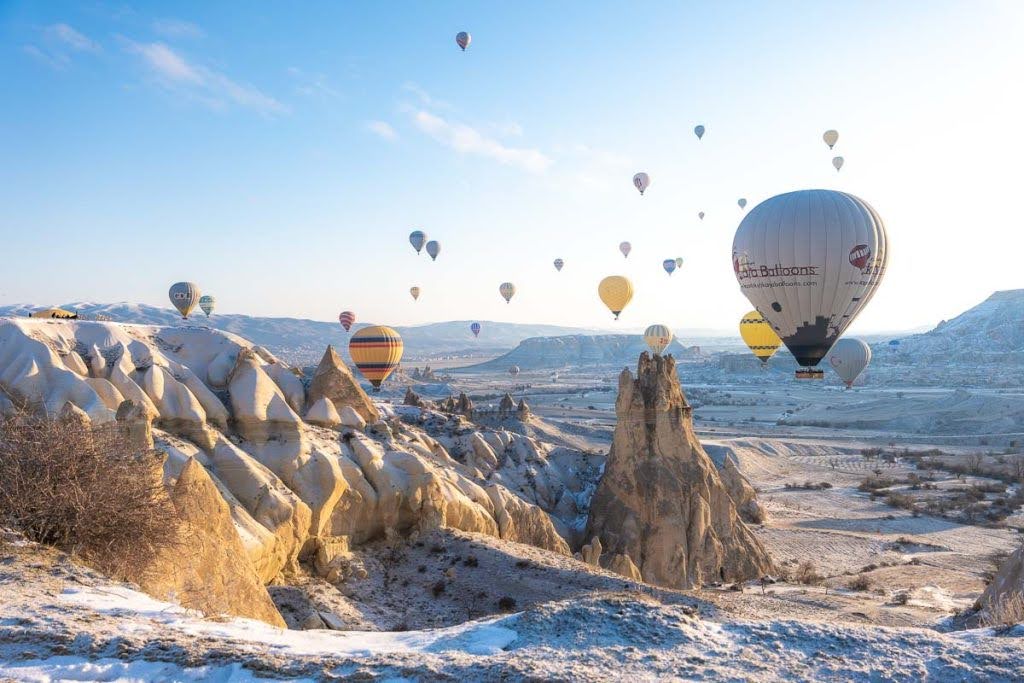
Cappadocia
One of Turkey's best-known historic landmarks, home to an underground city with many passages that was used as a hiding place during periods of invasion, along with its remarkable cave hotel.
Rumeli Hisarı fortress
It overlooks the Bosphorus and was built during the reign of Sultan Mehmed the Conqueror in just 4 months in preparation for the conquest of Constantinople. It is known for its high walls, which give you a wonderful view.
Göbekli Tepe
One of the most mysterious Turkish landmarks. Many researchers believe this place is evidence of advances in astronomy, and the temple holds many enormous carvings and hidden secrets.
The most important tourist landmarks in Turkey
Turkey is one of the countries through which many ancient civilisations have passed, which has left it rich in attractions — especially the city of Istanbul.
Turkey also has an outstanding location and wonderful weather thanks to its many coasts and seas, which combine a remarkable coastal outlook with a storied history.
For example, the city of Antalya has many enchanting beaches as well as heritage areas such as the old town of Kaleiçi. Here are Turkey's leading attractions:
- The Sultan Ahmed Mosque.
- The Basilica Cistern (Yerebatan).
- The Süleymaniye Mosque.
- The ancient city of Ephesus.
- The Göreme Open Air Museum.
- Topkapi Palace.
- The Galata Tower.
- The Palace of the Sultans.
- The Basilica Cistern.
Turkey's landmarks in Istanbul
The city of Istanbul is full of remarkable attractions and historic landmarks, thanks to its outstanding position between Asia and Europe, which made it a prize for many empires throughout history.
Istanbul was also the capital of the Byzantine Empire in ancient times, when it was known as Constantinople, and later became the capital of the Ottoman state under the name Istanbul.
After it fell to the Ottoman caliphate, the building of its historic mosques began, the best known being the Hagia Sophia and the Blue Mosque. Here are the leading Turkish landmarks in Istanbul:
- The Hagia Sophia and the Blue Mosque.
- The Grand Bazaar.
- The Bosphorus.
- Dolmabahçe Palace.
- The Galata Tower.
- Topkapi Palace.
- Beylerbeyi Palace.
- The Princes' Islands.
- The Basilica Cistern.
- The Church of St Anthony.
- Anadolu Hisarı.
Historic places in Istanbul
There are a great many historic places in Istanbul and it is not easy to count them all, as Istanbul is the best witness to Turkey's many landmarks.
It has many palaces, mosques, churches, museums and fortresses, which makes it a destination for visitors from all over the world. Here are the best-known historic places in Istanbul:
- Topkapi Palace.
- Soğukçeşme Street.
- Rumeli Hisarı and Yoros Castle.
- The Hürrem Sultan Bathhouse.
- The Chora Church.
- The Khedive Palace.
- The Hagia Sophia.
- The Kavrağa Madrasa.
Turkey's most important Islamic landmarks
Since the Islamic conquest of Turkey under Sultan Mehmed the Conqueror, a great wave of building began of Islamic landmarks in Turkey — mosques, an architectural style for buildings and more.
This was especially so in Istanbul, the capital of the Ottoman Empire and one of the best-known cities in the world. Here are the most important Islamic landmarks in Turkey:
- The Hagia Sophia Mosque in Istanbul.
- The Süleymaniye Mosque in Istanbul.
- The Blue Mosque in Istanbul.
- The Muradiye Mosque and the Grand Mosque in Bursa.
- The Sufi madrasa in Konya.
- The Eski Mosque in the city of Eskişehir.
Booking hotels in Turkey
There are many outstanding hotels in Turkey, which is a destination for many investors given its wealth of attractions and historic sites as well as its outstanding location.
You can book the best hotels in Turkey with outstanding offers and discounts through Tjwaal, which offers you a varied selection of hotels and resorts to meet every need and budget.
It also offers you the best booking services and flight deals at outstanding prices, which helps you enjoy an unforgettable, straightforward trip through Tjwaal's outstanding service.